What changes when you lose a tooth?
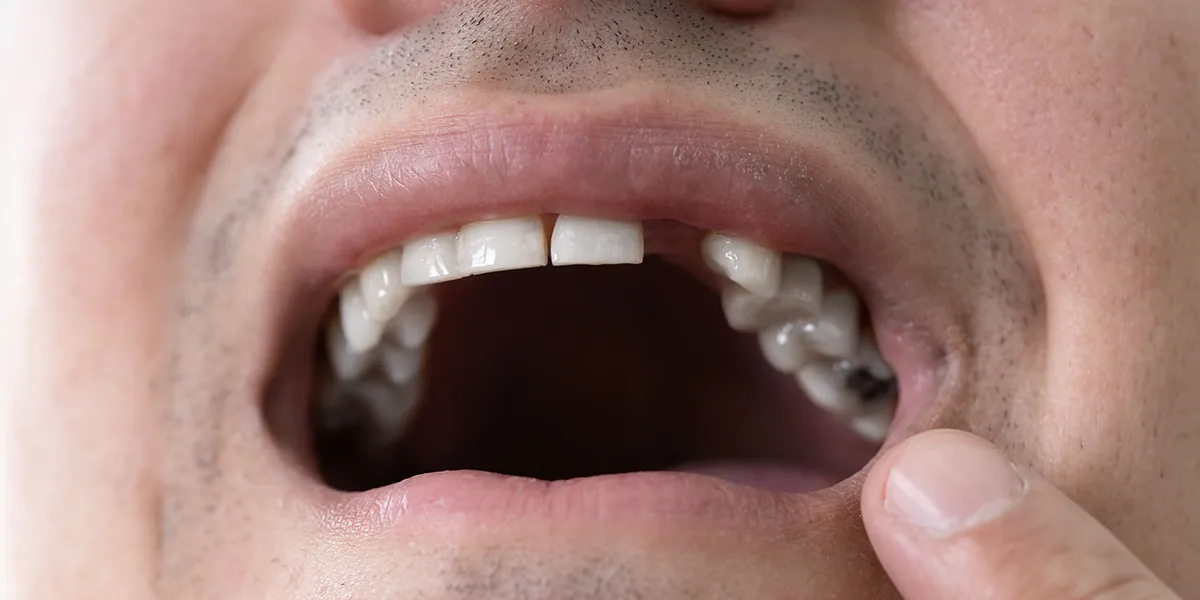
Maybe you’ve seen a parent or grandparent get by for years with a missing tooth and figured it can’t be that big a deal. And sure, you can live with a gap. Living your best life with one, however, can be a different story.
You adapt. Meals become a little slower. Certain foods quietly disappear from the menu. Smiles grow more reserved in photographs, and conversations involve subtle adjustments that only those closest to you will notice. Meanwhile, beneath those everyday compromises, the gap can take a quieter toll on your oral health as neighbouring teeth shift, your bite changes and the supporting bone begins to shrink.
In Australia, tooth loss remains a common oral health concern. The Australian Institute of Health and Welfare reports that around one in twenty adults has no natural teeth remaining, while many more are missing one or several teeth due to decay, gum disease, trauma, or previous extractions. Although modern dentistry offers highly effective replacement options, many people delay treatment without realising the gradual effects that can develop over time.
Quiet changes to confidence and everyday interactions
A missing tooth often affects confidence long before it causes physical discomfort.
Many people unconsciously develop small habits to hide the gap. They smile with their lips closed, cover their mouth while laughing, or angle their face differently during photographs. These behaviours rarely happen deliberately. They simply become automatic over time.
When confidence in your smile declines, social interactions can subtly change. Some people become more hesitant during conversations or avoid situations where they feel self-conscious. While these adjustments may seem minor individually, they can gradually influence personal relationships, professional interactions, and overall wellbeing.
The psychological impact of tooth loss is well recognised. Studies have consistently shown that oral health influences self-esteem, social participation, and overall quality of life. Feeling comfortable smiling freely contributes to emotional wellbeing in ways that are often underestimated until that confidence is lost.
Speaking clearly takes more effort than you realise
Teeth play an important role in speech.
Certain sounds rely on precise contact between the tongue, lips, and teeth. Missing even one tooth can subtly alter the way air flows through the mouth, affecting pronunciation.
Front teeth are particularly important for producing sounds such as “f,” “v,” “th,” and “s.” Their absence may create a slight whistle or lisp. Missing molars generally have less direct impact on speech, although they can still alter tongue positioning and overall oral stability.
Many people naturally compensate for these changes. Friends and family may never notice. The additional effort, however, often becomes noticeable to the individual, particularly during lengthy conversations or public speaking.
Every meal becomes a little more complicated
Eating should feel effortless.
A missing tooth changes the way biting forces are distributed across the mouth. Rather than chewing evenly, people often rely on one side, placing greater strain on a smaller number of teeth and muscles.
This uneven workload can lead to jaw fatigue after meals and accelerated wear on the remaining teeth. Some people also notice increased tooth sensitivity as certain areas begin carrying more pressure than they were designed to withstand.
Food choices often change without conscious intention. Hard fruits, raw vegetables, crusty bread, steak, nuts, and other nutrient-rich foods may gradually become less appealing simply because they require more effort to chew comfortably.
Over time, these dietary compromises may reduce nutritional variety. Rather than choosing foods based on health or enjoyment, decisions become driven by comfort and convenience.

Your digestive system feels the difference too
Digestion begins in the mouth.
Chewing breaks food into smaller particles while mixing it with saliva, which contains enzymes that begin the digestive process before food reaches the stomach.
When chewing becomes less effective, larger pieces of food are swallowed. The stomach and intestines must work harder to complete digestion, which may contribute to discomfort such as bloating or indigestion in some individuals.
Although a missing tooth alone does not directly cause digestive disease, maintaining efficient chewing supports healthy digestion and helps the body absorb nutrients more effectively.
Extra work doesn’t stop at your teeth
Your jaw joints and chewing muscles are designed to work in balance.
When one side consistently handles most of the chewing, that balance begins to change. Muscles on one side become overworked while others receive less stimulation.
Over time, some people experience muscle fatigue, jaw tenderness, headaches, or clicking within the temporomandibular joints (TMJ). Others develop uneven wear patterns that gradually alter the way their teeth fit together.
These symptoms often develop slowly, making them easy to dismiss as unrelated until they become persistent.

Changes beneath the surface matter most
One of the most significant consequences of tooth loss cannot be seen in the mirror.
Each tooth root continually stimulates the surrounding jawbone through everyday chewing. This stimulation signals the body to maintain healthy bone tissue.
Once a tooth is removed, that stimulation disappears.
The body naturally begins resorbing the bone that once supported the tooth root. This process, known as bone resorption, is entirely normal biologically, yet it gradually reduces the height and width of the jawbone in the affected area.
Research shows that substantial bone loss can occur during the first year after extraction, with gradual changes continuing thereafter if the tooth is not replaced.
This shrinking bone can make future restorative treatment more complex and, in some cases, may require bone grafting before a dental implant can be placed.
Teeth naturally drift into empty spaces
Teeth are remarkably stable when each one has neighbouring support.
Remove one tooth, and the balance begins to shift.
Adjacent teeth slowly lean toward the empty space, while the opposing tooth in the opposite jaw may gradually move further out of position since it no longer has a tooth to bite against.
These movements occur over months or years, gradually changing the way the upper and lower teeth meet..
As the bite becomes less stable, cleaning between crowded teeth becomes more difficult. This increases the risk of plaque accumulation, tooth decay, and gum disease while also complicating future restorative treatment.
Replacing a missing tooth early helps preserve the alignment of the surrounding teeth before these changes become established.

Tooth loss can gradually change facial appearance
Your teeth do more than support your bite.
They also help maintain the structure of your face.
Healthy teeth and jawbone provide support for the lips and cheeks. As bone resorption progresses, this underlying support gradually diminishes.
The changes are usually subtle at first. Over many years, however, they may contribute to a more sunken appearance around the mouth, thinner lips, and increased facial wrinkles.
While ageing naturally affects facial appearance, preserving the jawbone helps maintain facial structure for longer.
Modern dentistry offers reliable tooth replacement options
Replacing a missing tooth is more predictable and comfortable than ever. The right treatment depends on the location of the missing tooth, your oral health, and your individual needs.
Dental implants
Dental implants are considered the gold standard for replacing a single missing tooth. A titanium implant acts as an artificial tooth root, supporting a custom-made crown while helping preserve the jawbone and restore natural chewing function.
Dental bridges
Dental bridges replace one or more missing teeth by using neighbouring teeth for support. They provide a fixed, natural-looking solution that restores both appearance and function without implant surgery.
Removable dentures
Modern partial and full dentures are lighter, more comfortable, and more natural-looking than ever before. They offer an effective way to replace multiple missing teeth, improving chewing, speech, and smile aesthetics.

Acting early protects more than one tooth
Replacing a missing tooth is not simply about filling a gap.
Early treatment helps preserve bone, maintain proper tooth alignment, protect the surrounding teeth from excessive wear, and support efficient chewing for years to come.
An examination, supported by digital imaging where appropriate, allows your dentist to assess the condition of your jawbone and recommend the treatment most suited to your needs. Addressing tooth loss before significant structural changes occur often results in simpler treatment and more predictable long-term outcomes.

Replacing a missing tooth brings so much back
Replacing a missing tooth isn’t simply about filling a gap. It can help restore the freedom to eat comfortably, speak naturally and smile without thinking twice. Just as importantly, it can help protect your bite, neighbouring teeth and jawbone for years to come.
The sooner you explore your options, the more opportunity there may be to protect what you still have. Regular check-ups and good daily care also play an important role in catching problems early and reducing the risk of further tooth loss.
Ready to stop adapting to the gap? Talk to our dental team about your tooth replacement options and take the next step towards a healthier, more complete smile.